
By: Doris Jeruto – Head of Communications, TTNM
You know this scene. You’ve stood in it.
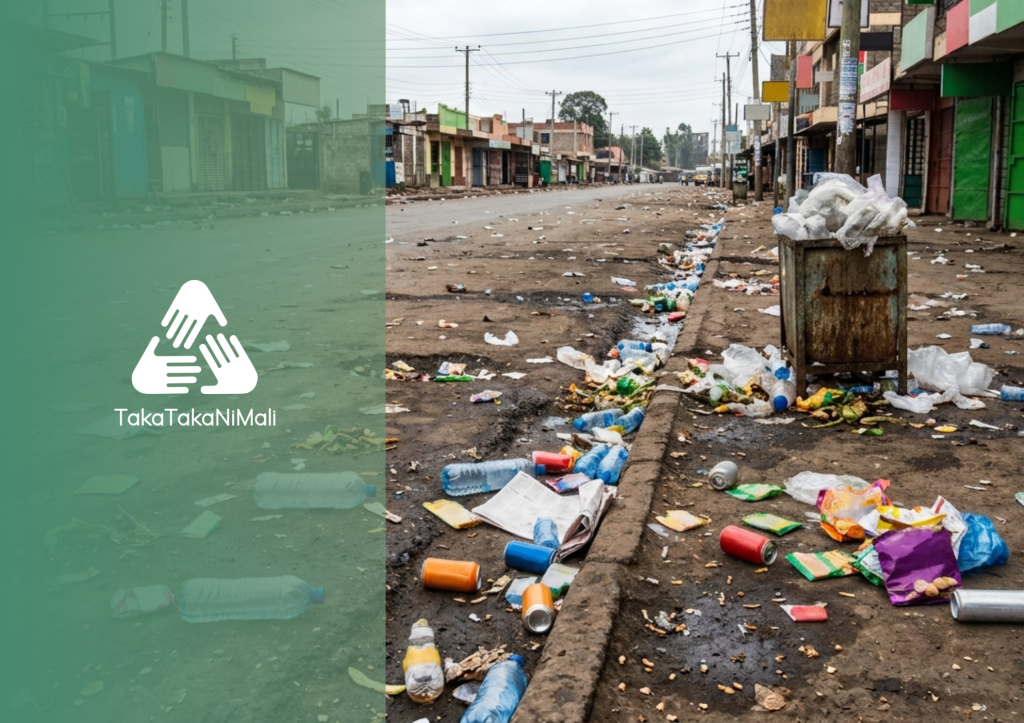
It’s the matatu stage on a Monday morning and you’re waiting, half-awake, phone in hand. Your eyes drift down: crisp packets, a bottle cap, a flattened juice carton, a plastic bag snagged on a fence and rattling in the wind and of course, the ubiquitous bright “Uhuru bags.”. You don’t flinch. You don’t even really see it anymore. Neither do I. Somewhere along the way, the rubbish became part of Nairobi’s scenery, as ordinary as the matatus and the hawkers’ stalls.
You know the rest, too. The drain that overflows the moment the rains arrive. The smell that hits you as you walk past the heap at the corner, the one that was “temporary” three years ago.
We all know it’s wrong. We just stopped expecting anything to change.
But I keep asking myself: what if we hadn’t? What if the frown, not the shrug, were the normal reaction?
In places like Japan, public bins are remarkably rare, yet the streets are spotless. People carry their litter in their bags all day, then sort it into precise categories when they get home. In Kigali, a whole city stops on the last Saturday of every month for umuganda, a community clean-up that has helped make it one of Africa’s cleanest cities. Nobody there is more virtuous than us. They just decided, collectively, that the street belongs to someone. It does. It belongs to us.
So how much awareness would it take to change that?
For years, waste management conversations have focused on exactly that: awareness. We tell people to separate their waste. We encourage communities to recycle. We explain the impact of littering and poor disposal.
But there is a gap between knowing what to do and actually doing it. Someone can know that plastic should be separated and still put everything in the same bin. A business owner can understand the value of responsible waste management and still struggle to adopt it. A household can want to recycle and have no collection service nearby.
So what does it really take to change waste behavior? From our work on the ground, we have learned that knowledge is only the starting point.
1. Knowledge: People need to know what to do
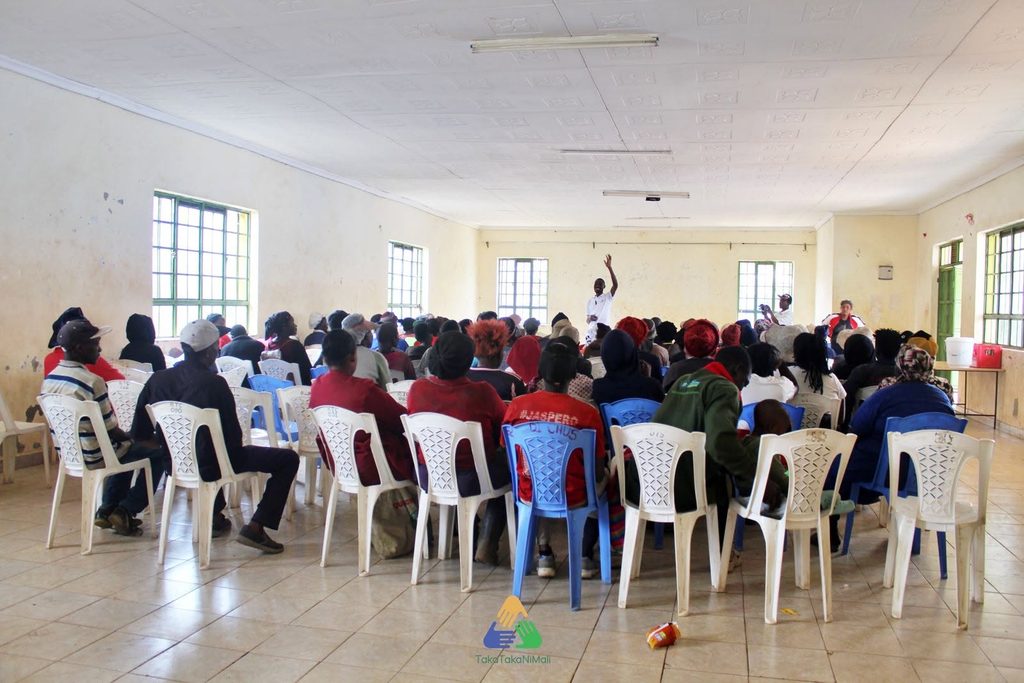
Behaviour change begins with information, but the information must be simple, practical and relevant. People need to understand why separation matters, what can be recovered, where each material should go and how their actions contribute to a cleaner environment and a circular economy.
“Manage waste responsibly” is not enough. We need to answer the practical questions: What should I separate? Where do I put it? Who will collect it? What happens afterwards? The more practical the answer, the easier it is to act on.
2. Motivation: People need a reason to act
Knowing what to do does not automatically create the will to do it. People change when they see a clear reason, whether environmental, economic, social or personal.
For a waste reclaimer, better separation can mean higher-quality material and better earnings. For a household, it can mean a cleaner place to live. For a business, it can support compliance, reduce waste-related costs and strengthen sustainability performance.
The message has to go beyond “waste is a problem” and answer the question every person is quietly asking: what is in it for me, my community or my business?
3. Access: People need systems that support the behaviour
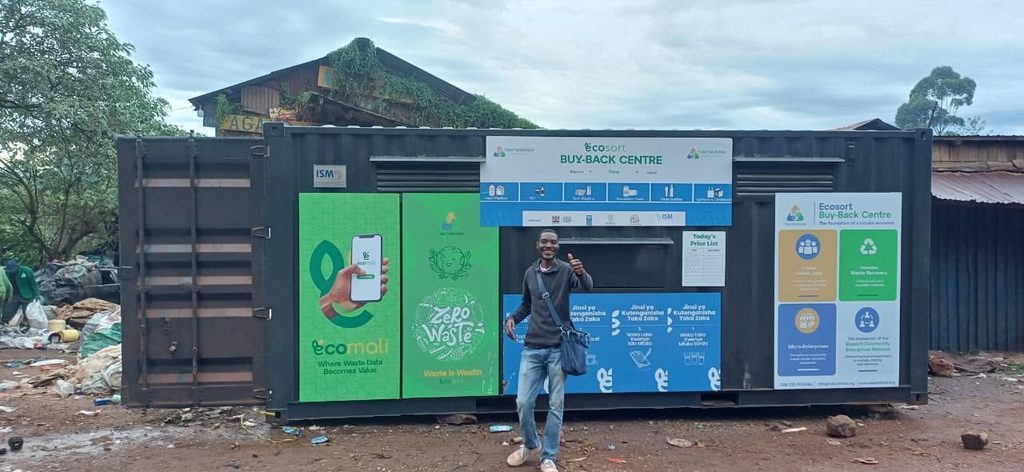
This is where many awareness campaigns fall short. We can ask people to separate their waste, but what happens when there is no separate collection? We can encourage recycling, but what happens when there is no reliable collection point or market for recyclables?
Behaviour is shaped by the systems around us. When the desired action is difficult, expensive or inconvenient, awareness alone rarely sustains it. Behaviour change must go hand in hand with infrastructure, services and functioning waste management systems.
4. Opportunity: People need the right conditions
Even informed and motivated people are limited by their circumstances. Do they have the time? The resources? Is a collection service available? Are waste workers properly equipped and supported? Can small businesses afford to introduce new systems?
Creating opportunity means removing the practical barriers between intention and action. That is why community engagement, partnerships, infrastructure and inclusive waste systems are essential to lasting change.
5. Reinforcement: People need to see that their actions matter
Finally, behaviour has to be reinforced. People keep doing things when they can see their effort producing results.
If residents separate their waste but never see what happens to it, they may eventually stop. If waste pickers improve their collection but see no gain in livelihoods or safety, their incentive weakens. If businesses invest in responsible waste management but receive no recognition, feedback or measurable results, the habit is hard to maintain.
Feedback matters. Recognition matters. Results matter. People need to know they are contributing to something bigger.
The lesson: don’t just create awareness, create conditions for action
Sustainable waste management cannot be built on awareness campaigns alone. We need to move from awareness to action to reinforcement and design interventions around the whole behaviour-change journey:
Knowledge + Motivation + Access + Opportunity + Reinforcement = Sustained Behaviour Change
The next time we look at a littered street, the question shouldn’t just be, “Don’t they know any better?”
We should also ask:
- Can they act?
- Are they motivated to act?
- Do they have the opportunity to act?
- And, importantly, what will make them continue?
Knowing is only the beginning. Real impact happens when we design a world where taking action is the easiest choice to make.