By: Doris Jeruto
For decades, waste has been viewed primarily through a lens of risk, as a public health challenge, an environmental burden, or a costly municipal liability. Across the globe, the traditional approach has been linear: collect, transport, and dispose.
Today, a powerful paradigm shift is underway across the African continent. Waste is increasingly recognized not as a liability, but as a high-value economic resource capable of driving industrial growth, creating green jobs, attracting foreign direct investment, and accelerating climate action. Africa is embracing a new macroeconomic reality: waste is wealth.
This transformation took center stage at the 3rd Africa Waste Is Wealth Summit (AWWS III)-ISWA Africa Waste is Wealth Conference, held from June 3–5, 2026, at ALN House in Nairobi, Kenya. Convened under the auspices of the International Solid Waste Association Africa Regional Chapter (ISWA ARC) and hosted in strategic partnership with the TakaTaka Ni Mali Foundation and Invest Kenya, the summit convened policymakers, institutional investors, development partners, private sector leaders, and circular economy innovators from across the globe.
Under the theme “Africa’s Waste Is Wealth: Systems, Finance, Policies and Standards for Africa’s Circular Future,“ Africa Waste Is Wealth Summit III served as a premier platform for advancing actionable, scalable solutions to catalyze sustainable economic development.
The Macroeconomic Opportunity Hidden in Waste
The global transition toward a circular economy is fundamentally reshaping international business models and capital allocation. Between 2018 and 2023, global circular economy investments exceeded USD 160 billion, signaling deep institutional confidence in resource-efficient commerce.
For Africa, this transition represents an extraordinary economic frontier:
- The Case of Kenya: Kenya generates approximately 22,000 tonnes of waste daily, yet only 4% is currently recycled.
- The Financial Outlook: According to the Kenya Waste Management and Circular Economy Prospectus 2026, unlocking value from waste across five priority sectors could inject over USD 700 million into the economy, contribute roughly 0.5% to national GDP by 2030, and create thousands of localized green jobs.
When managed strategically, municipal and industrial waste transitions from an environmental line-item into industrial feedstock, renewable energy sources and a foundation for robust entrepreneurship.
A Global Challenge Demanding Local Solutions
The urgency of accelerating circular frameworks is underscored by the Global Waste Management Outlook 2024 (GWMO 2024), co-published by the United Nations Environment Programme (UNEP) and International Solid Waste Association (ISWA) . The report projects that global municipal solid waste will scale from 2.3 billion tonnes today to 3.8 billion tonnes by 2050. Maintaining a business-as-usual approach will incur an estimated USD 640.3 billion annually in environmental degradation, public health impacts, and climate damages. Conversely, fully adopting circular principles could convert these systemic losses into a net annual global gain of USD 108.5 billion.
Further context from the GSMA Mobile For Development report Making Circularity Work highlights critical gaps in the current global infrastructure:
- The proportion of materials cycled back into the global economy fell from 9.1% in 2018 to 7.3% in 2023 due to factors such as unprecedented overconsumption and logistical barriers.
- Globally, less than 10% of plastics and only 22% of e-waste are recycled, even as e-waste generation grows three times faster than population growth.
- In low and middle-income nations, nearly half of all municipal waste remains uncollected.
While these metrics present a sobering view of global systemic gaps, they simultaneously highlight the immense market share available to regions that aggressively invest in resource recovery infrastructure and circular frameworks.
Building the Architecture of Africa’s Circular Future
Unlocking Africa’s circular potential requires a multi-faceted approach. At the AWWS III-ISWA Africa Waste is Wealth Conference, participants mapped out the foundational pillars necessary for systemic change: policy harmonization, standardized compliance, innovative blending financing, and integrated digital technologies.
A definitive consensus emerged: no single entity can drive the circular transition in isolation. Success hinges on structured, cross-sector collaboration between public institutions, private enterprises, institutional investors, academia, and local communities to build formalized, de-risked value chains.
Investing in Human Capital and Institutional Capacity
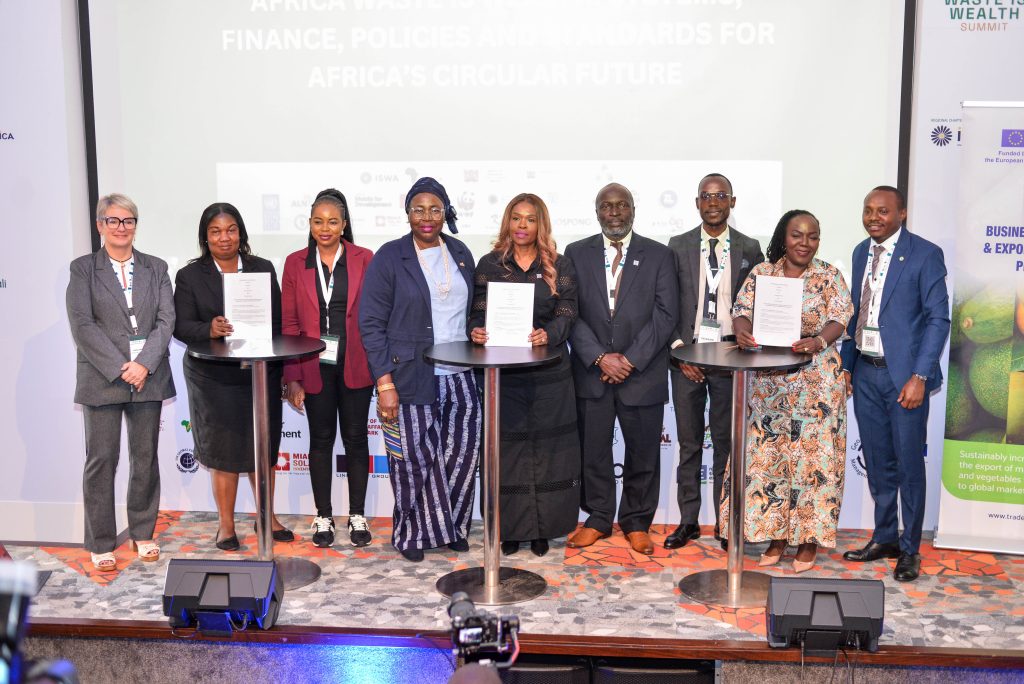
One of the landmark outcomes of AWWS III was the signing of a Memorandum of Understanding between TakaTaka Ni Mali Foundation, the ISWA Africa Regional Chapter, and the Jospong Group of Companies.
Cemented by the MoU, this collaboration seeks to strengthen professional capacity across Africa’s waste sector, support skills development and training, promote knowledge exchange between countries and contribute to the professionalization of waste management as a critical development sector.
The partnership reflects a growing recognition that technology alone cannot transform the waste sector.
Sustainable waste management systems depend on skilled professionals, strong institutions, and robust knowledge-sharing networks.By investing in people and institutions, Africa can build the expertise necessary to support long-term circular economy growth.
Empowering Waste Entrepreneurs Through Inclusive Circular Systems
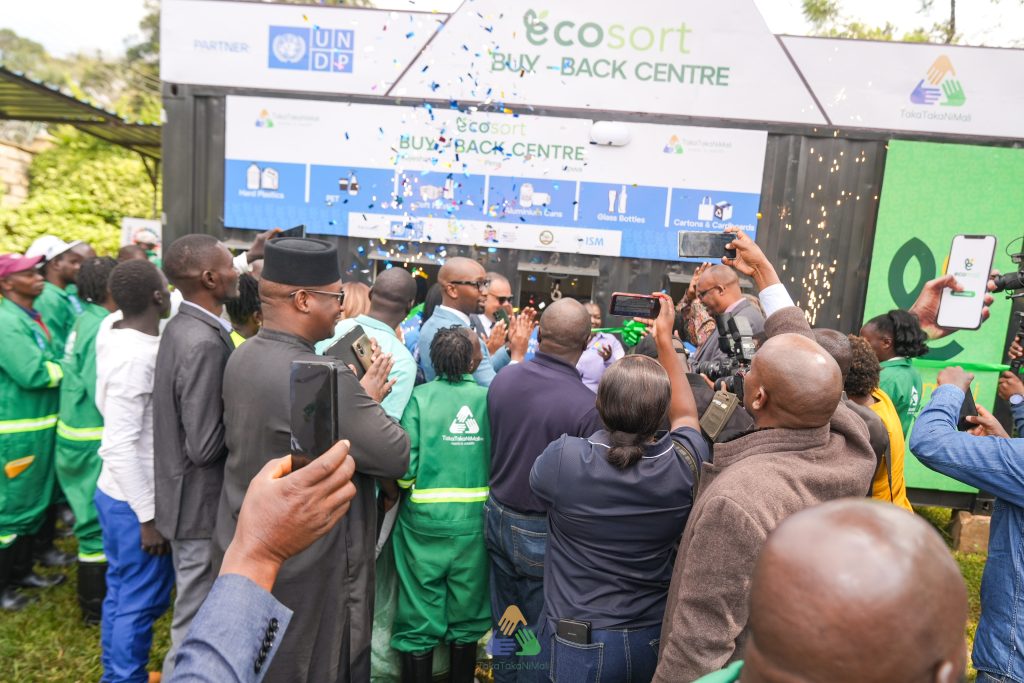
Another significant milestone during AWWS III was the launch of the Ecosort Buyback Centres pilot initiative by TakaTaka Ni Mali Foundation in partnership with UNDP KENYA .
Waste entrepreneurs remain the backbone of Africa’s recycling ecosystem. Every day, they recover valuable materials, support resource circulation, and provide essential services that often go unrecognized within formal waste management systems. Yet many continue to face barriers including limited access to markets, infrastructure, financing, and technical support.
The Ecosort Buy-Back Centres are a decentralized waste recovery model designed to strengthen material collection, sorting, and aggregation within communities. By creating accessible recovery hubs closer to waste generators and collectors, the model improves material recovery rates while strengthening local recycling networks.
The Ecosort model forms part of TTNM’s broader circular economy ecosystem, integrating community-based recovery systems, digital traceability through the Ecomali platform, and established recycling value chains. Through digital tracking and data-driven operations, Ecomali enhances transparency, improves traceability of recovered materials, and generates verified environmental, social, and economic impact metrics.
More importantly, they represent a model for integrating waste entrepreneurs into formal circular economy systems while creating dignified livelihoods and expanding economic opportunities at the community level.
East African Circular Management Coalition: A New Phase of Regional Cooperation
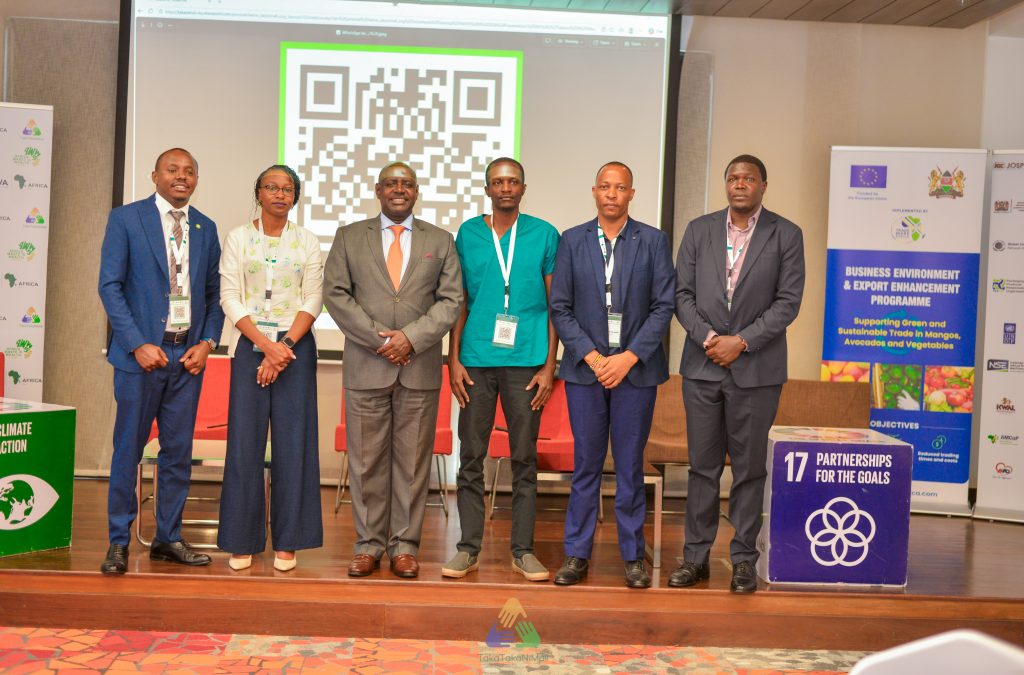
The East African Circular Management Coalition was also launched at the Summit, a regional platform designed to accelerate collaboration around technology, inclusion, policy harmonization, sustainable financing, and circular economy innovation across East Africa.
The coalition reflects a growing recognition that while waste is generated and managed locally, many of the enabling solutions required to build a thriving circular economy must be developed at a regional scale. Standards, interoperable data systems, financing mechanisms, producer responsibility frameworks, and cross-border value chains require coordinated approaches that transcend national boundaries.
As East African economies become increasingly interconnected, regional collaboration will be essential to unlocking investment, scaling innovation, and creating efficient markets for secondary materials and circular products.
Turning Vision Into Quantifiable Impact
The transition to a circular economy is no longer a theoretical exercise; it is actively yielding measurable returns across the continent. The recently published TakaTaka Ni Mali Impact Report (2022–2025) outlines how localized innovation and digital integration are shifting baseline outcomes.
The Road Ahead: Scaling Ambition
Africa stands at a unique developmental crossroads. The continent has a distinct opportunity to leapfrog legacy, carbon-heavy linear systems and directly construct economies that are inherently regenerative, resource-efficient, and socially inclusive.
The institutional momentum generated at the Africa Waste Is Wealth Summit (AWWS III)-ISWA Africa Waste is Wealth Conference is clear: governments are refining policy frameworks, investors are allocating capital to circular assets and enterprises are redesigning supply chains. The primary mandate now is scale, specifically scaling investment, infrastructure deployment, cross-border partnerships, and systemic ambition.